Facing the Headwinds of Change
I vividly remember how the world turned upside down during the pandemic surge, when our mobility and interactions were limited, yet we still needed to survive. But surviving and resourcefulness both run in our blood, and after some years, we are living in the so-called “new normal”. We came to realize that the real challenge is not finding the antidote to the virus, but how we can adapt to change, including the new ways of learning.

Barriers in Practice
There were many challenges and barriers to overcome to proceed with “learning as usual”. This is not a matter to be solved by teachers and students alone, but by many concerned stakeholders. Government and educators responded immediately to provide non-stop learning in most countries worldwide. Yeh and Tsai (2022) indicated four barriers in this new normal in the education landscape.
First-order barriers include external factors that may constrain classroom technology integration, such as inadequate access, limited time, insufficient training, and insufficient institutional support. These factors are extrinsic to teachers. Teachers may encounter this barrier due to resource constraints. Including technology, sufficient training, planning time, and relevant administrative support. This is essential to address because teachers’ technological skills and proficiency can impact the effectiveness and quality of online teaching.
The second-order barrier includes teachers’ beliefs about pedagogy and technology integration, as well as their willingness to change; these personal beliefs may promote or hinder the implementation of technology integration in classrooms.
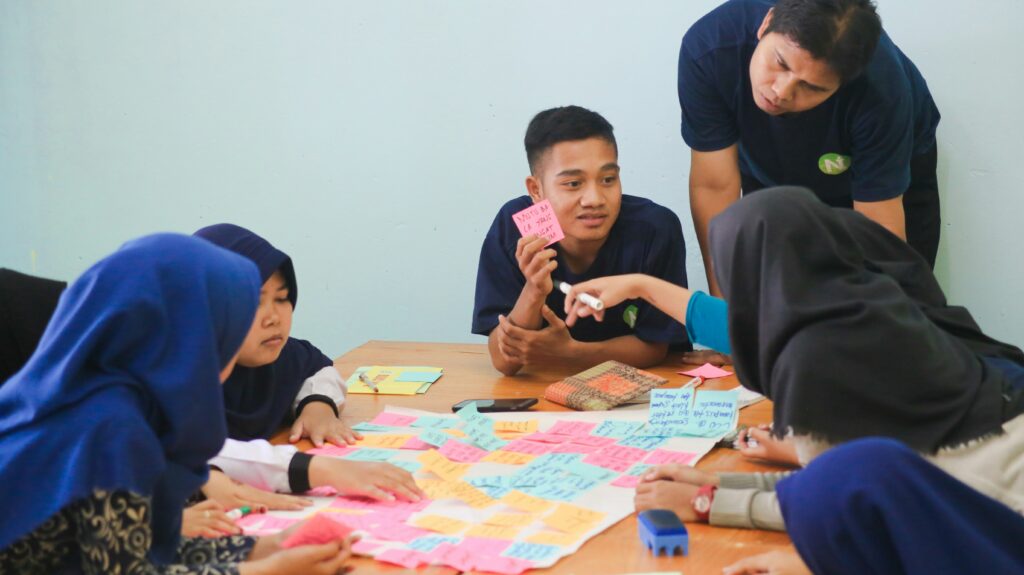
The third-order barrier includes teachers’ design thinking to redesign lessons and offer creative activities to better facilitate diverse learning needs. Design thinking is a powerful process for solving problems collaboratively. However, teachers may face different challenges when implementing design thinking in online settings.
2.5th-order barrier is classroom management for online teaching. In online teaching. The classroom is the computer and mobile devices. Many teachers find it challenging because it is hard to maintain attention with various apps popping up on their devices.
Effective Classroom Management
Effective classroom management in an online setting is not easy. Here is a YouTube video from Class in the Cloud that clearly shows how to master online classroom management.
Tip 1:Set Clear Expectations. Define rules and participation guidelines on the first day, and remind students periodically.
Tip 2: Use the Mute Button. Mute all students when they are not speaking to avoid background disruptions.
Tip 3: Monitor Student Engagement. Watch for signs like students looking down, reluctance to participate, or switched-off cameras. Teachers should switch up activities, such as asking direct questions, playing a game, or introducing something new.
Tip 4: Encourage Participation. Use breakout rooms for small discussions and employ interactive tools like polls, quizzes, a small blackboard, or a pointer.
Tip 5: Manage Your Time Wisely Set clear time limits to keep the class moving forward.
Reflection
The shift from traditional classroom learning to an online set-up made me realize how challenging changes can be. When mobility stopped, education had to continue and seek ways to create and adapt to a new normal. Everyone, including the students, teachers, learning institutions, and the community as a whole, had to adjust quickly. Ultimately, effective classroom facilitation is more than mastery of technology. It demands openness, creativity, and passion from both educators and learners. These should be carried on as we continue to adapt new ways of teaching, learning, and connecting.
References
Class in the Cloud. (2024, November 2). Master online Classroom Management | Online Teaching | 5 Proven Tips for Success! ��. YouTube. https://www.youtube.com/watch?v=a1XgwKxZbM0.
Yeh, C.-Y., & Tsai, C.-C. (2022). Massive Distance Education: Barriers and Challenges in Shifting to a Complete Online Learning Environment. Frontiers in Psychology, 13, 928717. https://doi.org/10.3389/fpsyg.2022.928717.