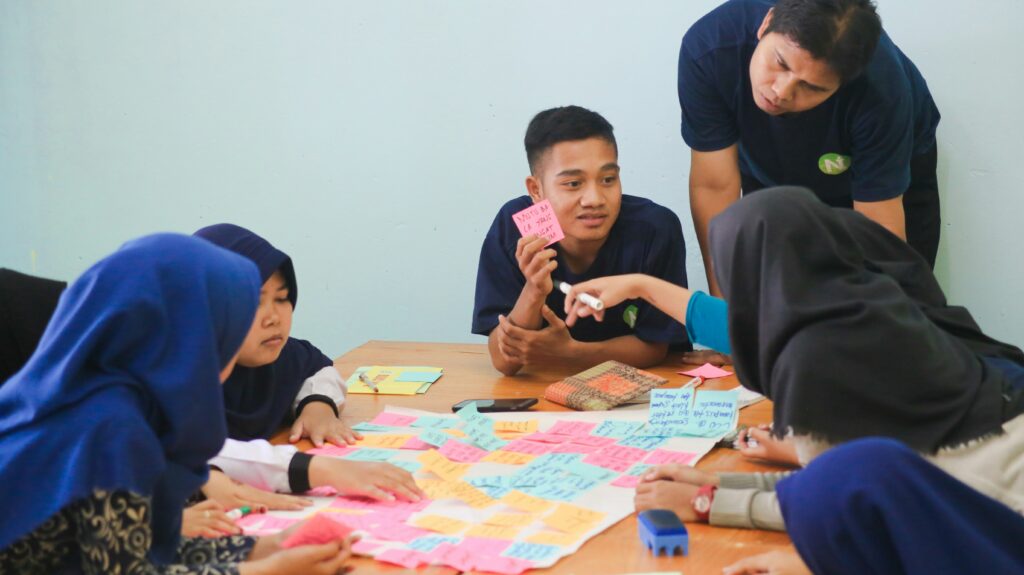
For centuries, teachers have stood as the undisputed sole bearers of knowledge separated from students by an invisible great wall. This traditional hierarchy, passed down from generation to generation, kept students in a passive role, simply receiving what was given. But today, that wall is coming down. Collaborative learning is breaking centuries-old norms, empowering students to rise from silence and take an active, free role in shaping their own education. This shift isn’t just exciting but revolutionary. Today, we will be exploring the changing role of teachers—from traditional lecturers who deliver knowledge to modern facilitators who guide, support, and empower students in their own learning journeys.
The Shift from Teaching to Facilitating
When I first reflected on how teaching is evolving, I realized that teachers aren’t just experts standing at the front of the room anymore. Graham and Roberts (2018) describe how higher education is moving toward open, networked learning spaces where educators act more like facilitators. Instead of being the main source of all the answers, they now guide students to discover and share knowledge together. This approach moves learning away from passive listening toward active participation.
Facilitators don’t just deliver facts—they help students develop important skills like creativity, problem-solving, and communication. As Gautam and Agarwal (2023) explain, facilitators design engaging activities that encourage exploration and teamwork. While it might sound easier, facilitation actually requires strong organization and communication to ensure every student feels supported and involved.
“Sage on the Stage” vs. “Guide on the Side”
I came across a video by Bill Wilder that really helped me picture the difference between the traditional “sage on the stage” instructor and the “guide on the side” facilitator. Although both roles have value, facilitators fit best in our current age of boundless and rapidly expanding information.They act as guides who help nurture active thinkers—encouraging curiosity, collaboration, and creativity. It’s inspiring to think of facilitators as agents shaping a future where learning is more open, connected, and meaningful.
The Student Experience: Growth, Independence, and New Challenges
I truly believe that when teachers become facilitators, something powerful happens in the way students experience learning. It becomes more personal and meaningful as students take charge of their own journey instead of just absorbing facts. Learning feels more connected to who they are, which makes all the difference. However, this shift isn’t always easy. Many students might struggle at first with finding direction in freedom, especially if they were used to tradittional learning. That’s where facilitators step in, carefully balancing guidance with giving students the space to explore, take risks, and express themselves freely. As Cahyono and Rusiadi (2025) point out, this new way of teaching opens the door to deeper engagement and growth, but it takes patience, flexibility, and trust from both teachers and students to really make it work.
Reflection
As I reflect on the changing role of teachers, I realize it’s about more than just new methods but it’s about adopting a whole new mindset. Teachers are no longer simply responsible for what students learn, but for how they learn. When educators become facilitators, students take an active role in shaping their own learning journeys, developing critical thinking, problem-solving skills, and the ability to connect ideas independently. This shift is truly inspiring, nurturing learners who are not only more intelligent but also deeply engaged and connected to the world around them.
References
Cahyono, D., & Rusiadi. (2025, January). The role of the teacher as a facilitator in the learning process: A review of educational psychology. International Journal of Teaching and Learning (INJOTEL), 3(1), 205-212.
Graham, L., & Roberts, V. (2018). SHARING A PRAGMATIC NETWORKED MODEL FOR OPEN PEDAGOGY: THE OPEN HUB MODEL OF KNOWLEDGE GENERATION IN HIGHER-EDUCATION ENVIRONMENTS. International Journal on Innovations in Online Education, 2(3). https://doi.org/10.1615/intjinnovonlineedu.2019029340.
Wilder, B. [Life Cycle Engineering]. (2018, May 30). Instructor vs. facilitator [Video]. YouTube. https://www.youtube.com/watch?v=J3IUyZiXAQo.