Category: edci339

Building Supportive Communities: The Role of Families and Society in Educational Shifts

Photo by sofatutor on Unsplash

As the cliche goes, “it takes a village to raise a child.” But in today’s interconnected and rapidly changing world, it might take the whole world to raise a generation. As education shifts from traditional classrooms to more flexible, technology-driven, and community-based frameworks, the involvement of families and nurturing communities has become absolutely essential. Home is every child’s first classroom, and family support forms the foundation where learning truly begins. But elevating to a higher level and widening its reach, we do so by bridging generations, encouraging lifelong curiosity, and overcoming challenges as a collective community.

Learning Begins at Home

Many researchers acknowledge the vital role that strong, positive connections between homes and schools have in supporting children’s development and education. Parental involvement in a child’s education starts at home. Parents help by creating a safe and healthy environment, providing good learning opportunities, offering support, and maintaining a positive attitude toward school. Many studies show that students do better in school when their parents are involved.

The paper, “Parental Involvement as an Important Factor for Successful Education,” by Durisic and Bunijevac (2017), cited research by Joyce Epstein, a leading expert in family-school partnerships. Epstein’s framework identifies six key factors which support effective parental involvement and improve student success, which are as follows:

Parenting Activities parents undertake to raise healthy, happy children prepared to succeed in school, including information about child development, health, and home support programs.

Communicating: Two-way communication between families and schools through notes, newsletters, conferences, and online platforms to keep parents informed and involved.

Volunteering Parents supporting schools by helping in classrooms, fundraising, or attending school events to contribute to the community.

Learning at Home: Helping parents support their children’s learning through homework assistance and providing information about the curriculum.

Decision Making: Involving parents in school governance and leadership roles to give families a voice in school decisions.

Collaborating with the Community: Linking schools with community services, such as health, cultural, and recreational programs, that benefit students and families.

Practical Tips for Parents for Successful Online Learning

In Bev Betkowski’s (2020) article, “How Parents Can Help Their Kids Succeed at Online Learning,” University of Alberta expert Suzanna Wong highlights that success in online learning depends on teamwork among parents, teachers, and students. Wong outlines four key ways parents can support their children remotely:

Supervise Learning
Especially for younger children, parents should assist with technical tasks like logging in and ensure students stay engaged. Even teens need supervision to manage their time and attend classes consistently.

Set Up a Schedule
A clear, consistent daily routine helps students balance work and breaks. Younger kids benefit from structured schedules with posted reminders, while older students should be involved in planning to increase motivation. Flexibility is important, especially for teens who may learn better with adjusted start times or recorded lessons.

Allow Playful Learning
For younger children, play can be a valuable learning tool to nurture creativity and understanding. For teens, parents can encourage discussions about online reading and critical thinking, such as spotting fake news.

Ask for Help When Needed
If a child struggles with material, parents should reach out to teachers promptly for support rather than relying solely on additional worksheets.

Supporting Kids Means Supporting Their Worlds

Here is a powerful TED Talk, What is the Most Important Influence on Child Development by Tom Weisner (2016), that can reshape how we view children’s growth. Weisner explains that the most significant influence on a child is not a single strategy or educational technique, but the context in which they live, including the family, community, and cultural environment. It serves as a reminder that children never develop in isolation, and their well-being depends on the networks of support around them.
 

Reflection

Education is evolving rapidly, and the role of families and communities in supporting children’s learning has never been more important. Parents who stay involved through clear communication, volunteering, and helping with schoolwork create a strong foundation for success. Especially with online learning, it takes a true team effort between parents, teachers, and students to build routines, stay engaged, and spark curiosity. A child’s development is shaped by their entire environment, including family, community, and culture. When we support the whole network around children, we give them the best chance to thrive.
 

References

Betkowski, B. (2020). How parents can help their kids succeed at online learning. Ualberta.ca. https://www.ualberta.ca/en/folio/2020/09/how-parents-can-help-their-kids-succeed-at-online-learning.html‌

Đurišic, M., & Bunijevac, M. (2017). Parental involvement as an important factor for successful education. Center for Educational Policy Studies Journal, 7(3), 137–153. https://eric.ed.gov/?id=EJ1156936.

Weisner, T. (2016). What is the most important influence on child development | Tom Weisner | TEDxUCLA. In YouTube. https://www.youtube.com/watch?v=gIZ8PkLMMUo. 

‌

Navigating Change: The Realities Behind the Shift to Facilitation

Facing the Headwinds of Change

I vividly remember how the world turned upside down during the pandemic surge, when our mobility and interactions were limited, yet we still needed to survive. But surviving and resourcefulness both run in our blood, and after some years, we are living in the so-called “new normal”. We came to realize that the real challenge  is not finding the antidote to the virus, but how we can adapt to change, including the new ways of learning.

Photo by Edwin Hooper on Unsplash

Barriers in Practice

There were many challenges and barriers to overcome to proceed with “learning as usual”. This is not a matter to be solved by teachers and students alone, but by many concerned stakeholders. Government and educators responded immediately to provide non-stop learning in most countries worldwide. Yeh and Tsai (2022) indicated four barriers in this new normal in the education landscape.

First-order barriers include external factors that may constrain classroom technology integration, such as inadequate access, limited time, insufficient training, and insufficient institutional support. These factors are extrinsic to teachers. Teachers may encounter this barrier due to resource constraints. Including technology, sufficient training, planning time, and relevant administrative support. This is essential to address because teachers’ technological skills and proficiency can impact the effectiveness and quality of online teaching.

The second-order barrier includes teachers’ beliefs about pedagogy and technology integration, as well as their willingness to change; these personal beliefs may promote or hinder the implementation of technology integration in classrooms.

The third-order barrier includes teachers’ design thinking to redesign lessons and offer creative activities to better facilitate diverse learning needs. Design thinking is a powerful process for solving problems collaboratively. However, teachers may face different challenges when implementing design thinking in online settings.

2.5th-order barrier is classroom management for online teaching. In online teaching. The classroom is the computer and mobile devices.  Many teachers find it challenging because it is hard to maintain attention with various apps popping up on their devices.

Effective Classroom Management

Effective classroom management in an online setting is not easy. Here is a YouTube video from Class in the Cloud that clearly shows how to master online classroom management.

Tip 1:Set  Clear Expectations. Define rules and participation guidelines on the first day, and remind students periodically.

Tip 2: Use the Mute Button. Mute all students when they are not speaking to avoid background disruptions.

Tip 3: Monitor Student Engagement. Watch for signs like students looking down, reluctance to participate, or switched-off cameras. Teachers should switch up activities, such as asking direct questions, playing a game, or introducing something new.

Tip 4: Encourage Participation. Use breakout rooms for small discussions and employ interactive tools like polls, quizzes, a small blackboard, or a pointer.

Tip 5: Manage Your Time Wisely Set clear time limits to keep the class moving forward.

Reflection

The shift from traditional classroom learning to an online set-up made me realize how challenging changes can be. When mobility stopped, education had to continue and seek ways to create and adapt to a new normal. Everyone, including the students, teachers, learning institutions, and the community as a whole, had to adjust quickly. Ultimately, effective classroom facilitation is more than mastery of technology. It demands openness, creativity, and passion from both educators and learners. These should be carried on as we continue to adapt new ways of teaching, learning, and connecting.

References

Class in the Cloud. (2024, November 2). Master online Classroom Management | Online Teaching | 5 Proven Tips for Success! ��. YouTube. https://www.youtube.com/watch?v=a1XgwKxZbM0. 

Yeh, C.-Y., & Tsai, C.-C. (2022). Massive Distance Education: Barriers and Challenges in Shifting to a Complete Online Learning Environment. Frontiers in Psychology13, 928717. https://doi.org/10.3389/fpsyg.2022.928717. 

Breaking Classroom Borders: Embracing Connectivism for Effective Facilitation

What is Connectivism

Connectivism is a digital-age learning theory that sees knowledge as a network of connections. Learning happens by building and navigating these networks through technology, social platforms, and various information sources.

This YouTube video, “Connectivism  – A Learning Theory” (Shagdar, 2020), offers one of the clearest explanations of Connectivism and its importance for the future of learning. One of the video’s highlights is that as knowledge now doubles every 18 months, information changes too quickly for traditional theories like Behaviorism, Cognitivism, and Constructivism to fully keep up. In today’s digital world, learning isn’t just about what you know, but about where you can find accurate, current information.

Connectivism suggests that learning is not an individualistic process. Learning can exist in networks, databases, organizations, and even technology itself. What really matters is our ability to build the right connections and tap into reliable, diverse sources. Staying connected is what makes continuous learning work.

Origins of Connectivism and the Stakeholders Driving It Forward

Modern L&D, Gray Harriman (2025) highlights how learning has shifted in today’s hyperconnected world. As technology reshapes how we access information, traditional theories can’t fully capture how people learn through networks, communities, and digital spaces. Connectivism emphasizes that learning happens through connections. Learning happens among people, ideas, and resources.

George Siemens and Stephen Downers

Connectivism began with Canadian educators George Siemens and Stephen Downes in the early 2000s. They proposed the Theory of Connectivism to address this widening gap, where the existing traditional learning theories didn’t fully explain how people can make the most of their learning experience in a digital, networked world.

Open Education and MOOC Innovators

Many early champions of MOOCs (Massive Open Online Courses) adopted Connectivism as their guiding approach. Their work centered on how learning can happen across networks, through shared resources, and within learning communities.

Knowledge Management Professionals

People working in knowledge-sharing roles,especially in business and organizational settings, often value Connectivist Ideas. Its principles are useful in supporting collaboration, information flow, and collective problem-solving

Learning and Development Leaders

People in Learning and Development who promote informal learning, communities of practice, and continuous upskilling naturally align with Connectivism. They tend to emphasize learning with others, rather than learning from an instructor.

Challenges and Considerations in Networked Learning

As education becomes increasingly digital, networked learning offers flexibility and connection beyond the traditional classroom. However, it also brings new challenges that can affect students’ confidence, focus, and overall success. The insights below are inspired by and drawn from Sweeney’s (2024) article, “Challenges of Online Learning for Students (and Solutions),” published by Northeast Technical Institute.

Isolation is one of the challenges many distant learners face. While it creates a sense of autonomy, learning has lost its natural feel of connection with peers and instructors. Although isolation should not be equated with loneliness, instructors can reduce feelings of loneliness by fostering community discussion, assigning group work, and providing consistent guidance on learning.

Motivation goes hand in hand with isolation and is another barrier for distant learners. Since learning does not take place in a physical classroom, online learning requires self-discipline and self-motivation. Learners should see the benefit of studying anytime, anywhere, and instructors should motivate them through regular, constructive feedback and an interactive course design.

Modernity is still not free of various technical challenges, which can lead to a loss of learning momentum. Some students are still experiencing the digital divide and unpredictable internet issues. Schools should offer tech support and recorded lessons that give every learner an equitable chance to succeed.

Last but not least, online learners are vulnerable to distractions and  time management. Home responsibilities, multitasking, and notifications can easily interrupt learning. This can be addressed through installing notification blockers, setting dedicated study spaces, and sticking to schedules to improve focus.

Reflection

Exploring Connectivism helped me understand how learning was redefined in this digital age. Learning is no longer a solitary process; it can now be done in networks. Knowledge has already evolved and been reinforced in a way that makes knowing where to find information as important as knowing what and how to use it. Connectivism is not just applied in academic settings but also in other fields that involve learning.

However, networked learning also reminded me that it is not free of issues, such as isolation, motivation, technical access, and distractions. It shows that human intervention still matters. For Connectivism to truly work, learners need strong communities, accessible tools, and instructors who intentionally cultivate connection.

References

Harriman, G. (2025, July 27). Learning in the Networked Age: Embracing Connectivism for Modern L&D. https://www.linkedin.com/pulse/learning-networked-age-embracing-connectivism-modern-ld-gray-gt9af/. 

Shagdar, Z. (2020, July 2). Connectivism – A Learning theory. www.youtube.com. https://www.youtube.com/watch?v=SvhY70C6Drk. 

Sweeney, A. (2024, March 14). 7 Top Challenges of Online Learning For Students (and Solutions). Northeast Technical Institute. https://ntinow.edu/7-top-challenges-of-online-learning-for-students-and-solutions/. 

Beyond Lectures: The Modern Educator’s Role in Guiding Active Learning

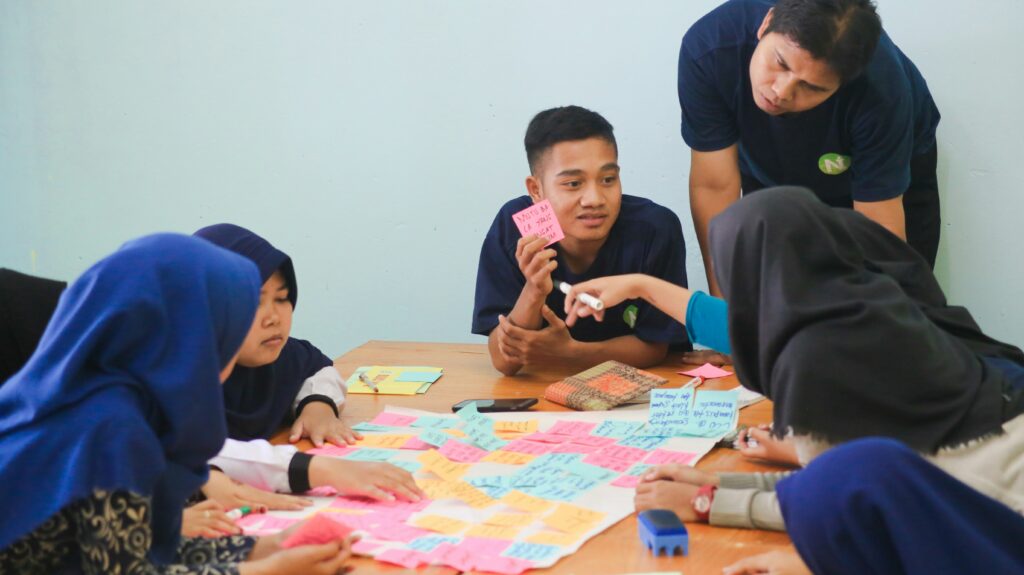
Photo of teacher facilitating the discussion by Zainul Yasni on Unsplash

For centuries, teachers have stood as the undisputed sole bearers of knowledge separated from students by an invisible great wall. This traditional hierarchy, passed down from generation to generation, kept students in a passive role, simply receiving what was given. But today, that wall is coming down. Collaborative learning is breaking centuries-old norms, empowering students to rise from silence and take an active, free role in shaping their own education. This shift isn’t just exciting but revolutionary. Today, we will be exploring the changing role of teachers—from traditional lecturers who deliver knowledge to modern facilitators who guide, support, and empower students in their own learning journeys.

The Shift from Teaching to Facilitating

When I first reflected on how teaching is evolving, I realized that teachers aren’t just experts standing at the front of the room anymore. Graham and Roberts (2018) describe how higher education is moving toward open, networked learning spaces where educators act more like facilitators. Instead of being the main source of all the answers, they now guide students to discover and share knowledge together. This approach moves learning away from passive listening toward active participation.

Facilitators don’t just deliver facts—they help students develop important skills like creativity, problem-solving, and communication. As Gautam and Agarwal (2023) explain, facilitators design engaging activities that encourage exploration and teamwork. While it might sound easier, facilitation actually requires strong organization and communication to ensure every student feels supported and involved.

“Sage on the Stage” vs. “Guide on the Side”

I came across a video by Bill Wilder that really helped me picture the difference between the traditional “sage on the stage” instructor and the “guide on the side” facilitator. Although both roles have value, facilitators fit best in our current age of boundless and rapidly expanding information.They act as guides who help nurture active thinkers—encouraging curiosity, collaboration, and creativity. It’s inspiring to think of facilitators as agents shaping a future where learning is more open, connected, and meaningful.

The Student Experience: Growth, Independence, and New Challenges

I truly believe that when teachers become facilitators, something powerful happens in the way students experience learning. It becomes more personal and meaningful as students take charge of their own journey instead of just absorbing facts. Learning feels more connected to who they are, which makes all the difference. However, this shift isn’t always easy. Many students might struggle at first with finding direction in freedom, especially if they were used to tradittional learning. That’s where facilitators step in, carefully balancing guidance with giving students the space to explore, take risks, and express themselves freely. As Cahyono and Rusiadi (2025) point out, this new way of teaching opens the door to deeper engagement and growth, but it takes patience, flexibility, and trust from both teachers and students to really make it work.

Reflection

As I reflect on the changing role of teachers, I realize it’s about more than just new methods but it’s about adopting a whole new mindset. Teachers are no longer simply responsible for what students learn, but for how they learn. When educators become facilitators, students take an active role in shaping their own learning journeys, developing critical thinking, problem-solving skills, and the ability to connect ideas independently. This shift is truly inspiring, nurturing learners who are not only more intelligent but also deeply engaged and connected to the world around them.

References

Cahyono, D., & Rusiadi. (2025, January). The role of the teacher as a facilitator in the learning process: A review of educational psychology. International Journal of Teaching and Learning (INJOTEL), 3(1), 205-212.

Graham, L., & Roberts, V. (2018). SHARING A PRAGMATIC NETWORKED MODEL FOR OPEN PEDAGOGY: THE OPEN HUB MODEL OF KNOWLEDGE GENERATION IN HIGHER-EDUCATION ENVIRONMENTS. International Journal on Innovations in Online Education, 2(3). https://doi.org/10.1615/intjinnovonlineedu.2019029340.

Wilder, B. [Life Cycle Engineering]. (2018, May 30). Instructor vs. facilitator [Video]. YouTube. https://www.youtube.com/watch?v=J3IUyZiXAQo.

EDCI 339 Test Post

This post  will appear in a few places:

  1. in the blog feed on the front of your website;
  2. in the ‘Distributed and Open’ menu on your website. This is because we have applied the “edci339” category to this post and the menu item “Learning Design” has been created from the category “edci339.” For every post you make for this course, please assign the “edci339” category to it. You are welcome to use this blog for your personal hobbies or for other courses, in which case, you could create additional menu items and categories for them.
  3. if you give permission, your posts categorized “edci339” will be aggregated onto the Blog Feed on the EDCI 339 Course Website.

Please delete this post once you understand this. If you have any questions, please reach out to your instructor.

© 2025 EDCI 339 Blog

Theme by Anders NorenUp ↑